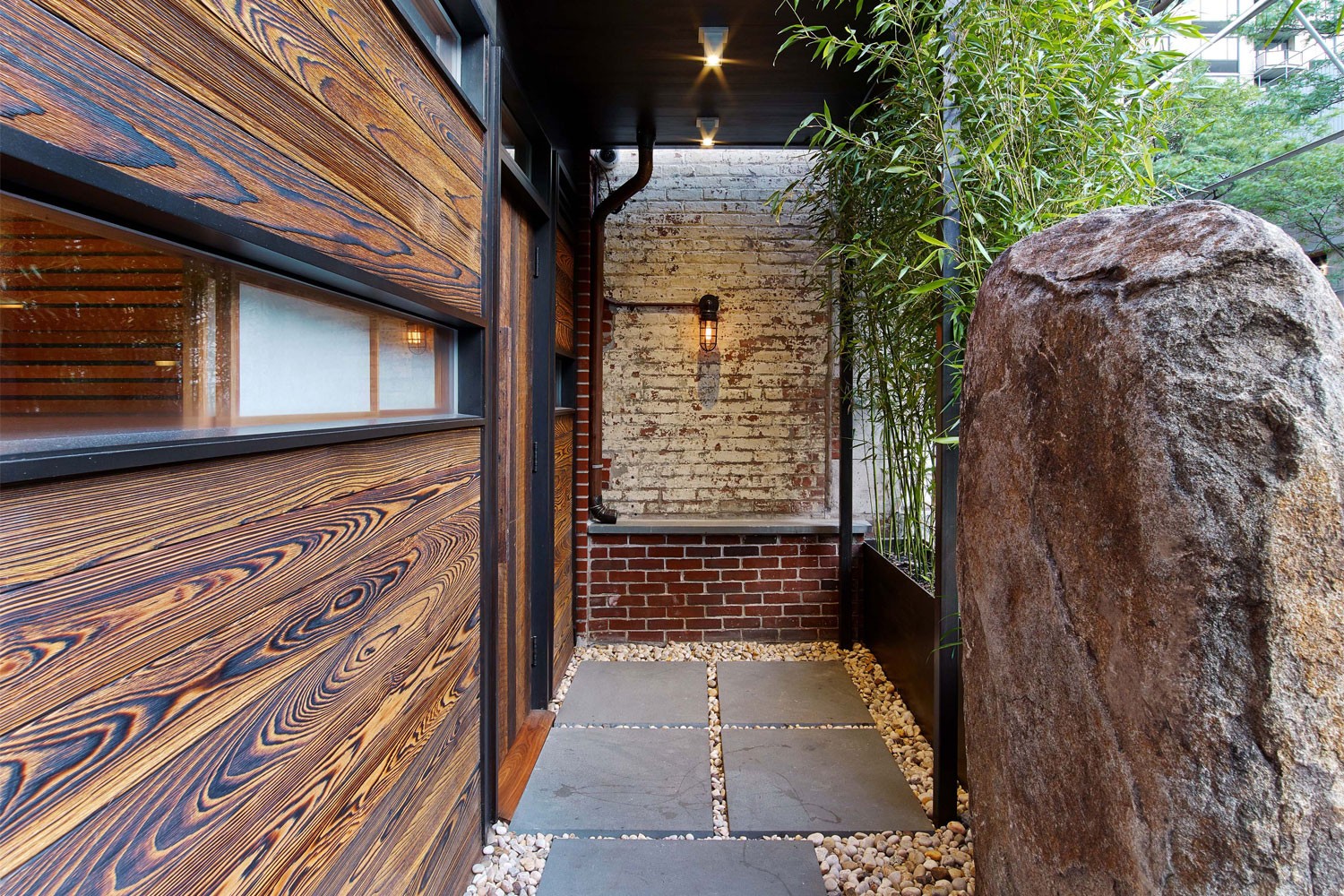
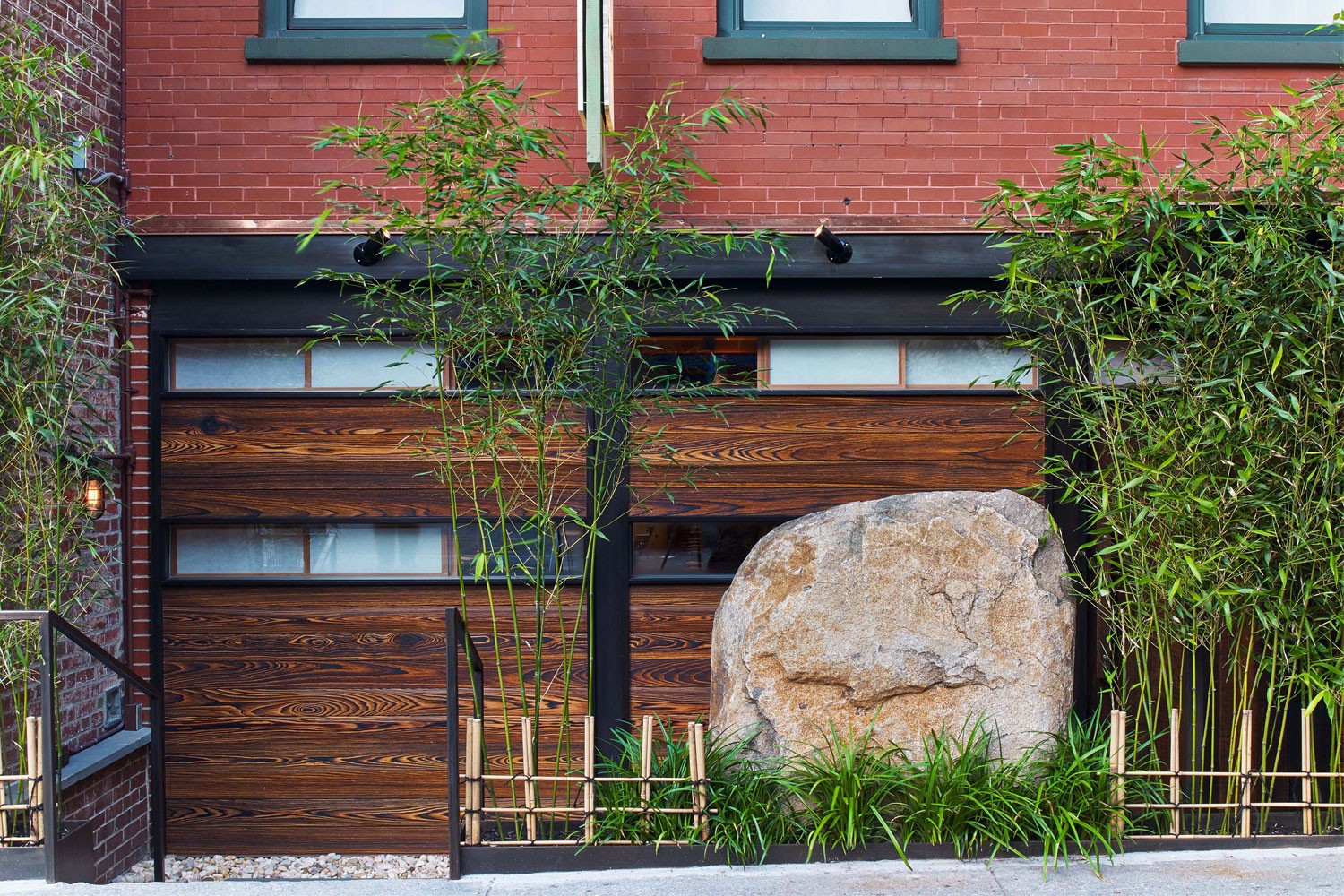




COS, an upscale European retailer under the H&M (Hennes and Mauritz) brand, recently expanded into the Canadian retail market. G architects collaborated with New York-based Office AO to bring to life the brand’s 3-story, 6,700 sf flagship location in Toronto’s fashionable Yorkville neighborhood. The modern façade is clad in reSAWN’s MONOGATARI shou sugi ban charred wood. Inside the store is light and airy, reflecting the same sparse Scandinavian aesthetic found in the menswear, womenswear and kidswear sold at the store.
"Blackened wood is having a moment, be it lacquered, stained, charred, or oxidized, and we're all in. For those who dare to join us, here's a roundup of our favorite noirish pieces."
- VIEW MORE: REMODELISTA
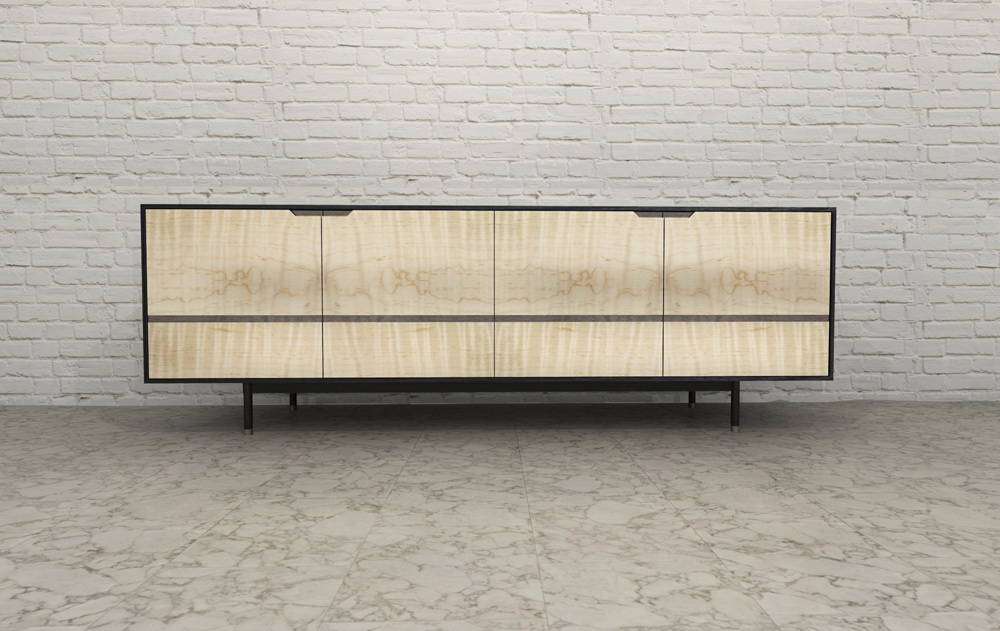
Above: From charred wood experts reSAWN TIMBER co., the Credenza 1 has a case of shou sugi ban treated wood with pale maple doors and oxidized maple accents.
“Olson Kundig combines an ancient Japanese wood-burning technique with 21st-century interaction design at Design Miami/Basel Collectors’ Lounge.”
KEVIN SCOTT
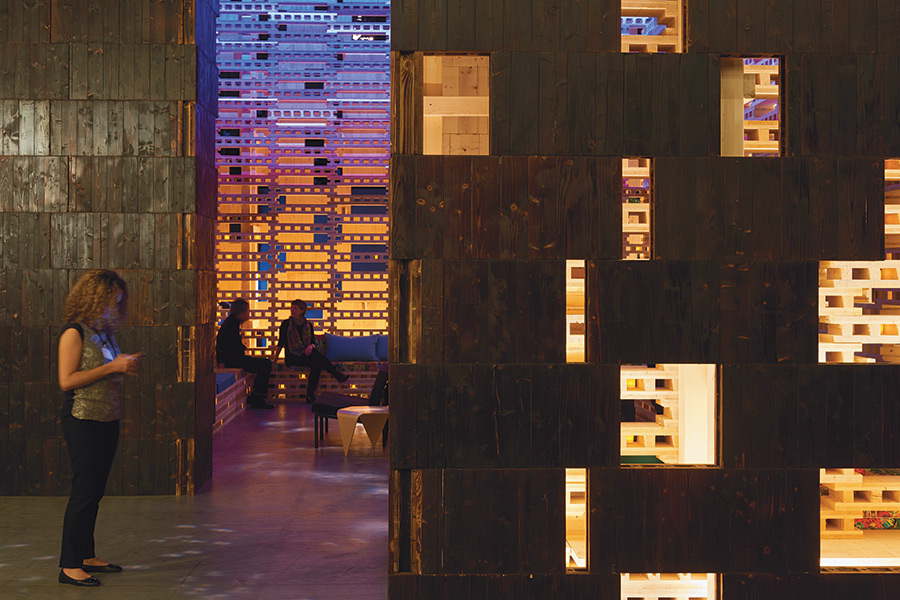
Regional building styles and construction techniques weave a complex history that reflects the qualities, cultures, and narratives of a particular place. Olson Kundig took this to another level when designing Outpost Basel, an architectural pavilion at the Design Miami/Basel Collectors’ Lounge in Basel, Switzerland. The wood construction legacies of several places came together to create a bespoke structure that embodies the global design culture in which we operate.
The architects hail from Seattle, in the heart of the Pacific Northwest’s timber country. They brought their innovative mastery of materials to Western Europe, where companies like the Austrian goliath Holzindustrie Schweighofer are pushing wood technologies forward in new ways. The two worked together in Romania to construct the pavilion out of a wood-block system that is typically used as formwork for concrete and then discarded afterwards. Instead of using the wood bricks to create forms, the architects decided to give them a rich black hue by charring them with a traditional Japanese wood-burning preservation technique, completing the international mélange that makes the project unique.
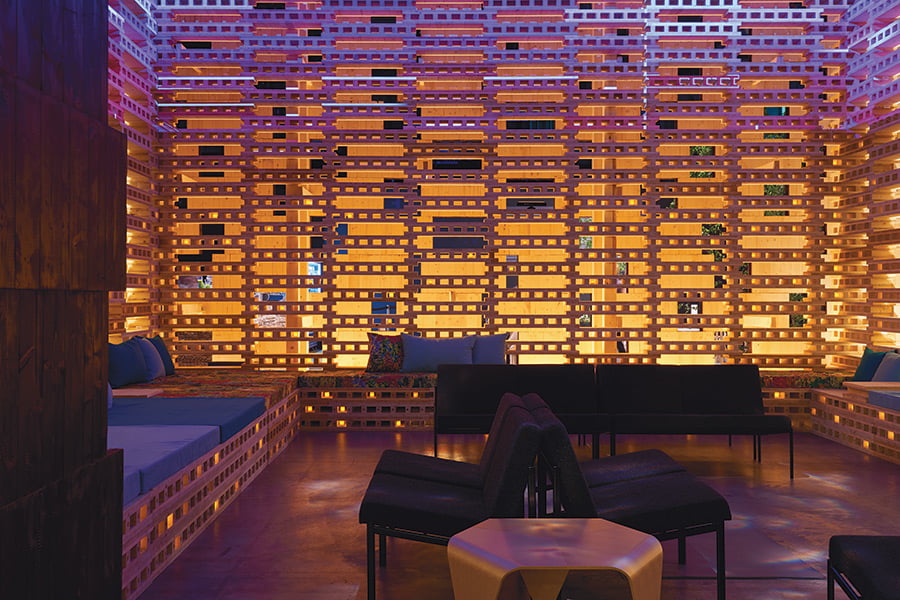
In the center of the lounge is a large box made from the wood blocks provided by Schweighofer. The designers liked the raw look of the wood blocks, so they left them unfinished. The system is a series of wooden parts that are doweled together, “like IKEA furniture, avoiding screws,” Olson Kundig principal Tom Kundig told AN. The light walls were quickly and easily constructed to form the interior volume, and a series of openings were inserted by shifting the blocks according to the Fibonacci sequence. Once the walls were erected, they were charred using “Shou Sugi Ban,” an ancient technique that has been used in Japan to protect untreated wood against rot and insects. It was also an important way to fireproof villages before modernity. The process involves charring the wood and then using different oils to achieve different effects, while changing the intensity and exposure of the torch to produce varying levels of charring. At first, Schweighofer—who has been a leader in the wood processing industry for more than four centuries—was skeptical of the unusual idea, but eventually executed it at their Romanian compound, treating the blocks before they were shipped to Basel. They used a torch to apply the burn to the surface, and after two coats of torch, they put a sealing oil on the surface which sets the finish and reduces the risk of the black soot rubbing off (on people’s clothes in Basel). The inside of the space was left raw, so that it maintained the warmth of the wood blocks, while the burnt black exterior relates to the rest of the space in which the pavilion sits.
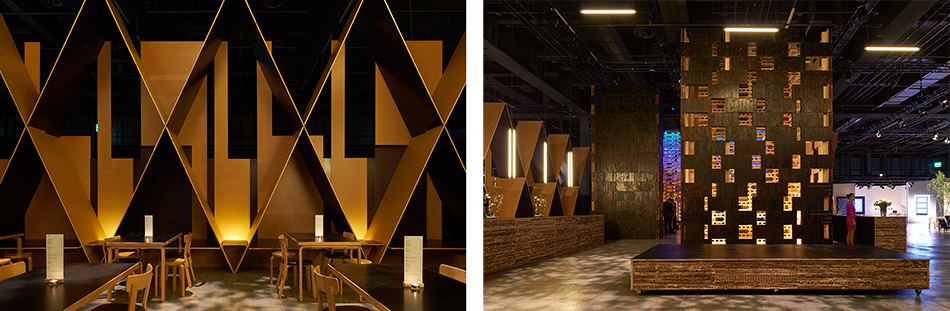
“FOR THE OUTPOST BASEL PAVILION, OLSON KUNDIG INTEGRATED SEVERAL WOOD CONSTRUCTION LEGACIES, FROM A WOODBLOCK SYSTEM IMPLEMENTED WITH AN AUSTRIAN COMPANY IN ROMANIA TO THE ANCIENT JAPANESE PROCESS KNOWN AS SHOU SUGI BAN.”
– SOURCE: http://archpaper.com/news/articles.asp?id=8215

Charred Wood by reSAWN Timber is offered in natural, but also vibrant, tones.
reSAWN is pleased to announce that our CHARRED collection of shou sugi ban woods are now available treated to a Class A Fire Rating for Interior Applications. Contact us to learn more about specifying CHARRED wood for exterior siding, interior wall cladding and custom furniture.
shou sugi ban wall cladding + black walnut conference table
RSTco. furniture is pleased to offer KURUMI: North American Black Walnut that is lightly CHARRED and then prefinished with either hardwax oil or a conversion varnish. We recently created 2 of these KURUMI table tops for reDISTRICT based out of Alexandria, VA. The tops are 30” X 30” X 1-3/4” thick. Learn more about RSTco. furniture and our collaborative design process. KURUMI can also be used for interior wall cladding & millwork – request samples here.
The Value of a Natural Product is Without Equal